Paris · 17th century – now
Famille Cochin
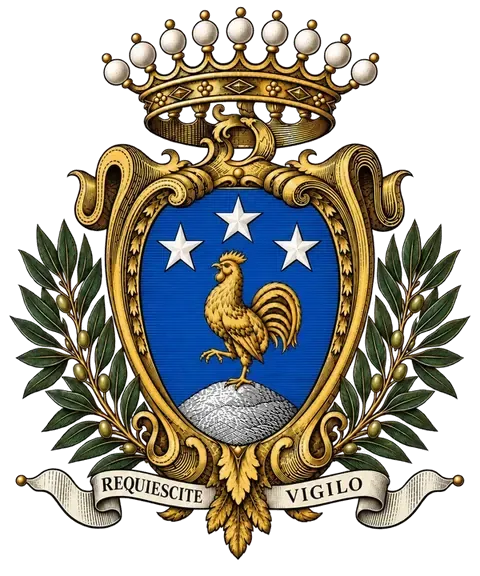
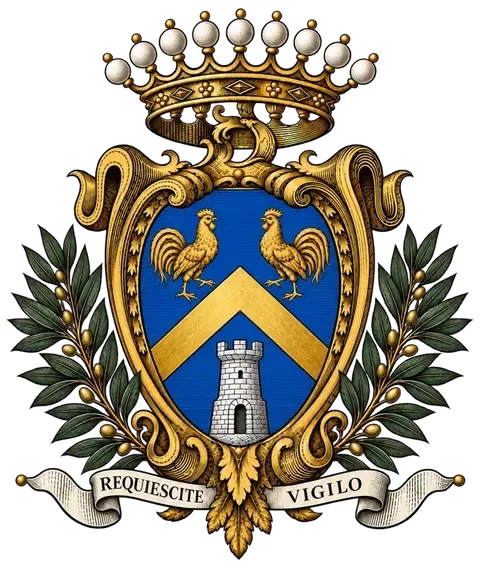
Requiescite vigilo“Sleep; I keep watch”
A legend traces it to the water merchants of Saint Louis, whose registers name Cochins from 1268. The proven line begins in 1656 with a mercer from Montlhéry, at the gates of Paris; then come an alderman whom the city ennobled, a priest who founded the hospital, three generations of mayors and deputies, a prefect, three members of the Institut, a minister of the Great War and two sons who did not come back: three and a half centuries of a Paris family that kept watch over its city.
- 1268
- a Cochin at the parloir aux bourgeois
- 1748
- the aldermanship that ennobles
- 1780
- a hospital that bears the name
- 5
- members of parliament
- 9
- Légion d’honneur
CaptionFold
I · The lore
From the boatmen of Lutetia to the water merchants
The water merchants of the Middle Ages are held to be the heirs of the boatmen of Lutetia, though no text has established it[1, 2]. Cochins appear in the records of the city of Paris from the 13th century: one sat in 1268 at the parloir aux bourgeois, the forerunner of the Hôtel de Ville, another was a sworn salt broker in 1320[3, 4]. Tradition makes one of them an ancestor, “alderman of the city under Saint Louis”; yet the family’s unbroken descent starts with a mercer born at Montlhéry in 1656[5, 6]. The alderman of 1560 that Chaix d’Est-Ange gives it, Charles Cochin, is not in the city’s registers, which have Jehan Sanguyn and Nicolas Hac elected that year[7, 8].
Read the chapterFold the chapter5 dates · 3 notes on the origins
- The boatmen of Lutetia
- A Gaulish people who gave their name to Paris, the Parisii were settled in the region by the 3rd century BC, and their power rested on the river traffic on the Seine, which they controlled[1, 2]; their stronghold, Lutetia, stood according to Caesar on an island in the river[3]. Boatmen, shipowners and traders on the rivers of Gaul, the nautae were organized in guilds; the most famous, that of the nautae of the Parisii, raised a carved pillar to Jupiter under the reign of Tiberius, in the 1st century[4, 5]. Its dedication says they paid for it from their common fund: their guild is the first society on record in Paris[6]. Unearthed beneath Notre-Dame cathedral on 16 March 1711, it is the oldest dated monument of Paris and now stands in the baths of Cluny[5, 7]. One of its reliefs is held to show them under arms, with shields and spears[8]. The water merchants of the Middle Ages are held to be their heirs, and the ship in the arms of Paris, already on those merchants’ seal in 1210, is said to go back to them[9, 10]. Yet no text, Lucien Lambeau wrote in 1912, has established the descent[11].
- The hanse of the water merchants
- As early as 1121, Louis VI granted the water merchants of Paris a duty of sixty sous on every boat carrying wine; in 1170 a charter of Louis VII gave them the policing of the river and the privilege of navigation on the Seine, from the bridge of Mantes to the bridges of Paris[1, 2]. Under Saint Louis the hanse’s sworn men became aldermen and their head the provost of the merchants: in 1263 it elected a first municipality, a provost and four aldermen[3]. The city’s seal, first recognised by Saint Louis, sealed the acts of the provost of the merchants; in the 14th century it bore the legend “Sigillum mercatorum aquæ Parisius”, seal of the water merchants of Paris[4]. Offences were judged at the parloir aux bourgeois, where a Cochin sat in 1268, and in 1320 Jehan Cochin was one of the sworn salt brokers of the river trade[5, 6, 7].
The Cochins of the registers
1268
A Cochin at the parloir aux bourgeois
At the parloir aux bourgeois, the forerunner of the Hôtel de Ville, the provost of the merchants Jehan Augier confiscated two new boats that Denise de Bardouille had brought in without a partner from the Paris hanse; among those sitting with him, the register of the customs of the river trade names a Cochin[1, 2, 3]. Augier then headed the hanse of the water merchants, whose burghers came to form the Paris municipality under Louis IX[4, 5]. Félibien and Lobineau printed the text in 1725 in their Histoire de la ville de Paris[2]; Le Roux de Lincy, who dates it to 2 April 1268, counted in 1846 a “Cochin Martin” among that year’s city councillors[6, 7]. Family tradition makes this Cochin an ancestor, “alderman of the city under Saint Louis”, as Gabriel Hanotaux recalled when he received Denys Cochin into the Académie française in 1912[8]; a profile published that year was “not absolutely certain that this one belongs to the family”[9].
1320
1482
A royal provost at Montlhéry
Denis Cochin was royal provost of Montlhéry in 1482, under Louis XI, and again in 1490, according to Malte-Brun’s list, as to that of the Société historique de Montlhéry[1, 2, 3]. Seat of a provostship since Philippe Auguste, over some hundred parishes, about half of today’s Essonne, Montlhéry saw nearly eighty provosts succeed one another until the Revolution: steward of the king’s estates, the provost collected their revenues and dispensed justice[4]. The 1912 profile of Denys Cochin asserts that “the Cochin of Louis XI was the king’s provost”[5]; the mercer of 1656, ancestor of today’s branch, came from Montlhéry, but no document connects the two men[6].
1560
An alderman in 1560?
According to Chaix d’Est-Ange and Gabriel Hanotaux, in 1912, Charles Cochin, sieur de Combreulx, a merchant, burgher and consular judge of Paris, was appointed alderman of the city in 1560; the family already held there, writes Chaix d’Est-Ange, “a distinguished rank” among the bourgeoisie[1, 2]. The registers of the deliberations of the city’s Bureau do not name him: on 16 August 1560 the assembly elected as aldermen Jehan Sanguyn, notary and secretary to the king, and Nicolas Hac, burgher[3]. Nor were there consular judges in Paris before the edict of November 1563: the first were elected on 27 January 1564[4].
1588
One of Henri III’s penitents
On 17 August 1588, at Chartres, Henri III signed the roll of the perpetual officers of the archconfraternity of the Penitents of the Annunciation of Our Lady, which he had founded at the Augustinian convent in Paris: René Cochin was one of its four mandeurs[1]. By his letters of 15 September 1585, the king had given the officers of this “royal congregation of the Penitents” the privileges, exemptions and franchises of the officers of his household[2]. Félibien and Lobineau, who printed these documents in 1725, say nothing more of René Cochin, and no document connects him to the family[1].
- Lore and proof
- Tradition takes the Cochins back to Saint Louis: “Here is the true Cochin, son of the Cochins who went back to Saint Louis; here is the good parishioner of Notre-Dame!”, Gabriel Hanotaux exclaimed as he received Denys Cochin into the Académie française in 1912[1]. A profile published that year finds Cochins under Louis XI and Charles VIII, but doubts that the alderman of Saint Louis belongs to the family[2]. The unbroken descent that Wikipedia gives starts with the mercer born at Montlhéry in 1656[3].
II · The rise
From the counter to city hall
The family’s unbroken descent starts with a mercer born at Montlhéry in 1656[1]. Claude-Denys Cochin, a Paris merchant and a former warden of the mercers’ guild[2, 3], was elected alderman (échevin) of Paris on 16 August 1748, and the office ennobled him[4, 5, 6]. Jacques-Denis Cochin, a lawyer, mayor of the 12th arrondissement of Paris under the Restoration and deputy for the Seine from 1824 to 1827[7, 8], was made a hereditary baron by an ordinance of Louis XVIII dated 10 March 1820[8, 9].
Read the chapterFold the chapter10 dates · 3 notes on the Paris of the merchants · the Cochin engravers
1656
A mercer from Montlhéry
Claude-Denys Cochin is born at Montlhéry, at the gates of Paris, in 1656; a mercer in Paris, he is the man from whom the family’s descent, as Wikipedia gives it, starts[1]. The Pierfit tree has him born in 1653[2]. A Claude Cochin, mercer, burgher of Paris, appears in the index of the insinuations of the Châtelet for deeds of 1697 and 1698[3].
1696
Arms on record
A prosecutor at the Grand Conseil, whom Chaix d’Est-Ange calls Cauchin, and Pierre Cochin, a grocer and burgher of Paris, have their coat of arms entered in the Armorial général[1]. The Paris I register of the Armorial, at the Bibliothèque nationale, carries on page 1331, as no. 2065 of the list drawn up on 7 January 1698 at the Horloge du Palais office, “Pierre Cochin, grocer and burgher of Paris”, who “bears azure, a chevron or between two roosters of the same in chief and a tower argent in base”, for twenty livres[2, 3]. Louis Paris’s Indicateur knows no other Cochin in the registers of the généralité, and no Cauchin[4].
1739
Henri Cochin, the advocate
Henri Cochin (1687–1747), a celebrated advocate at the Parlement of Paris and administrator of the Hôtel-Dieu and the Incurables, is granted on 17 April the ennobling office of counsellor and secretary to the king[1]. His branch has since died out: only the line of the alderman of 1748 has lasted to this day, writes Chaix d’Est-Ange[2].
1741
Syndic of the Holy Land
At the request of the Cordeliers of the Great Convent of Paris, Claude-Denys Cochin accepts the office of “general syndic of the Holy Land”[1]: the layman to whom the Franciscans, bound by their vow of poverty, entrust the temporal management of their works[2]. Elected alderman, he resigns in 1750 for lack of time[3]; his descendant Henry Cochin publishes the deeds in 1923, from family papers[4].
1748
1752
1754
1780
1820
The title of baron
By an ordinance of 10 March, Louis XVIII makes Jacques-Denis Cochin, mayor of the 12th arrondissement, a hereditary baron[1, 2]. The title is granted on the promise of setting up an entailed estate, a majorat, and the letters patent are to follow[3]. He sets up the majorat on his estate of La Roche, by an estimate of 23 August, and pays the fee[4, 5, 6]. But the Commission du sceau refuses to write the foundation of the Cochin hospital by his uncle the abbé into his letters of nobility; the baron then gives up the letters, in December 1821[6, 7]. Family tradition has it that the hospital was its majorat[8]. The family goes on bearing the title: the Pierfit tree counts Denys-Guillaume Cochin as the third baron, from 1841 to 1886, and Le Figaro in 1911 names “Baron Denys Cochin, of the Académie française”[9, 10].
1838
The majorat annulled
On 1 September, eleven months after his father’s death, Jean-Denis Cochin, deputy for the Seine, asks the Sceau to annul the majorat set up in 1820 on La Roche; the dossier, opened in his name and his father’s, is at the Archives nationales[1, 2]. He had still looked into the title’s letters patent in December 1830; they were never taken[3]. Révérend, who had the Sceau’s registers, lists the ordinance of 1820 among those the letters never followed, and yet follows the title down to the grandsons of Augustin Cochin[4, 5].
The Paris of the merchants
- Burghers of Paris
- Under the Ancien Régime, “bourgeois de Paris” was a status: under article 173 of the custom of Paris, one had to have one’s home in the city, as owner or tenant, for at least a year and a day, and one had to be a burgher to hold office there, as provost of the merchants, alderman or consul[1]. Burghers were exempt from the taille and their privileges came close to those of the nobility: Charles V had given them the right to bear a helmed coat of arms and a sword[2]. By his letters patent of 9 August 1371, writes Borel d’Hauterive, that king granted them most of the distinctions of nobility, short of nobility itself[3]. Wikipedia lists the Cochins, under the 16th century, among the surviving families of the Paris bourgeoisie[4].
- Merchants with a coat of arms
- The Cochins were merchants: Chaix d’Est-Ange makes Charles Cochin a merchant burgher and consular judge, Pierre Cochin was a grocer in 1696, and today’s branch descends from a mercer born at Montlhéry in 1656[1, 2, 3]. Grocers and mercers belonged to the Six Corps, the merchants of Paris organized in guilds from the Middle Ages to the Revolution; the mercers, with statutes of 1407, were the largest of them[4, 5]. A coat of arms did not make a man noble: the Armorial général, which Louis XIV ordered in 1696 to regulate their use and to raise a tax, took in those of nobles and burghers alike[6]. Pierre Cochin had his own entered in it[2].
- The office that ennobled
- According to La Chesnaye-Desbois, writing in 1770, Henri III reserved nobility in 1577 to the provosts of the merchants and the aldermen of Paris alone; the privilege, abolished in 1667, restored in 1707 and abolished again in 1715, was finally restored in 1716[1]. This is called the noblesse de cloche, the “bell nobility”, after the bells of the town hall that called the assemblies electing the city’s officers[2]. The provost and the aldermen of Paris were elected on 16 August, the aldermen being renewed by half each year[3]. On 16 August 1748 the city corporation elected Claude-Denys Cochin alderman, and the office ennobled him: today’s branch descends from him[4, 5].
III · The modern Cochins
From the town hall to the State
A surviving family of the French nobility, it counts among its members Paris administrators, politicians including a minister, a prefect and historians[1]. Jean-Denis Cochin was mayor of the former 12th arrondissement of Paris, then deputy for the Seine[2]; Augustin Cochin (1823–1872), a leading liberal Catholic[3], was mayor of the 10th arrondissement until 1858[4], then prefect of Seine-et-Oise and a member of the Académie des sciences morales et politiques[5, 6, 7]. Denys Cochin, a municipal councillor in 1881 and deputy for Paris from 1893 to 1919[8, 9], was Minister of State in the Briand cabinet from 29 October 1915 to 12 December 1916[10, 11]; Henry Cochin was deputy for the Nord from 1893 to 1914[12], and his son Claude followed him in 1914[13, 14, 15]. Denys Cochin (1913–2003) sat on the Paris city council from 1953 to 1971[16].
Read the chapterFold the chapter9 dates · 3 speeches
1827
The infant schools
Jean-Denis Cochin, mayor of the 12th arrondissement, builds at his own cost a school house for a thousand children, with a training college for the “salles d’asile”, the schools for the very young he had begun to gather in 1826[1, 2]. His Manuel des salles d’asile appears in 1833[3].
1861
1872
1893
Two Cochins in the Chamber
Denys Cochin, a municipal councillor in 1881, is deputy for Paris from 1893 to 1919[1, 2]. Henry Cochin is deputy for the Nord from 1893 to 1914 and mayor of Saint-Pierre-Brouck for thirty years[3]; Claude Cochin follows his father Henry as general councillor in 1910 and as deputy for the Nord in 1914[4, 5, 6].
1911
1915
In government during the war
On 29 October Denys Cochin joins the Briand cabinet as Minister of State[1, 2]. His son Jean, a lieutenant commanding the submarine Papin, had been mentioned in army dispatches in August for destroying an enemy minefield, jumping into the water himself[3, 4]. The war takes his sons Jacques (1915) and Augustin (1916) and a son-in-law[5, 6]; his nephew Claude, deputy for the Nord, dies of influenza in the night of 30 to 31 December 1918[7, 8].
1944
The Resistance
Settled in Brittany, Sabine Cochin has founded an escape line that hides Allied airmen and gets twenty to thirty of them to England[1, 2]. Her daughter Agnès de La Barre de Nanteuil, a liaison agent, is arrested on a denunciation on 13 March; deported, she is wounded when Allied aircraft strafe her convoy and dies on 13 August at Paray-le-Monial[3, 4].
1953
1997
Admission to the ANF
The family is admitted to the Association d’entraide de la noblesse française[1].
Denys Cochin at the Académie
On 29 February 1912 Denys Cochin was received into the Académie française, in the seat of Albert Vandal: his reception speech, and Gabriel Hanotaux’s reply, which tells his life and his family’s. On 15 February 1923 his successor, Georges Goyau, delivered his eulogy. The texts, now in the public domain, are reproduced from the Académie’s website, in the original French.
Denys Cochin · 29 February 1912
Reception speech at the Académie française
Taking the seat of Albert Vandal, Denys Cochin pays tribute to the historian, his childhood friend, and reflects on liberty, history and politics.
« Notre sol produit abondamment un personnage paradoxal : le révolutionnaire homme d’ordre, d’autorité et de gouvernement ; le libéral draconien. »
Gabriel Hanotaux · 29 February 1912
Gabriel Hanotaux’s reply
The historian Gabriel Hanotaux welcomes the new member and tells his life: the ancestor who was an alderman under Saint Louis, the Cochin Hospital, the campaign of 1870 at Bourbaki’s side, Pasteur’s laboratory, the city council and the Chamber, and the portrait of the “grand bourgeois”.
« Vous êtes né à Paris, rue Saint-Guillaume ; vous êtes, autant qu’on peut l’être, un Parisien : « Le clocher de mon village, disiez-vous, ce sont les tours de Notre-Dame. » »
Georges Goyau · 15 February 1923
Eulogy of Denys Cochin
Elected to Denys Cochin’s seat, the historian Georges Goyau pays the customary tribute to his predecessor: the Parisian who walked his city “as through a family museum”, Bourbaki’s pennant-bearer of 1870, the chemist of Pasteur’s laboratory, the speaker in the Chamber, the wartime Minister of State, the father of two sons killed at the front.
« Un Cochin, dans Paris, se sent l’héritier d’un passé qui oblige, et le serviteur né de ses frères. »
Art
The collection of Baron Denys Cochin
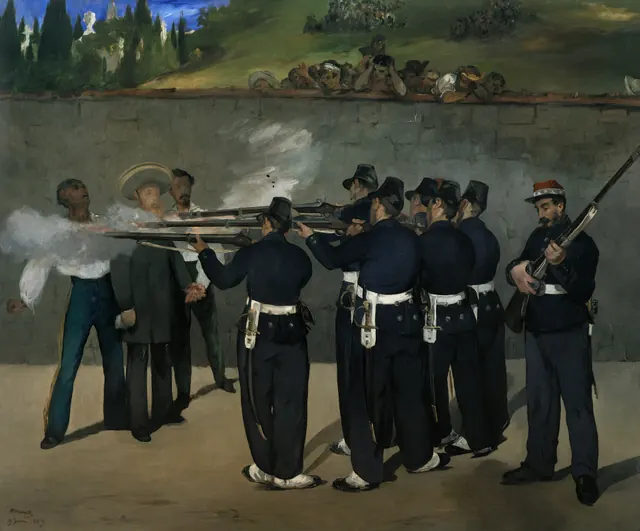
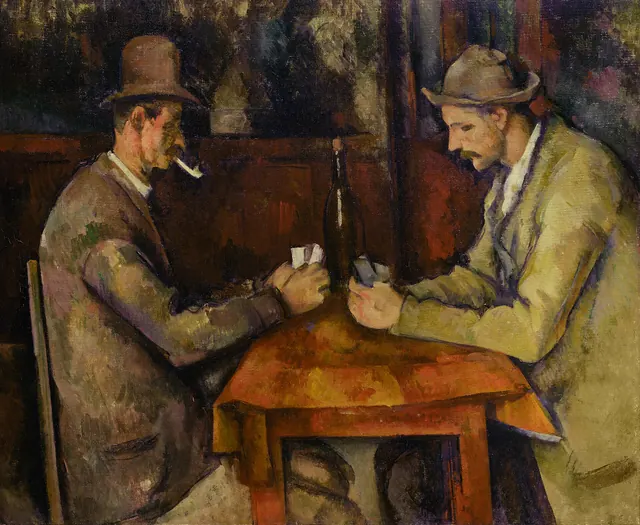
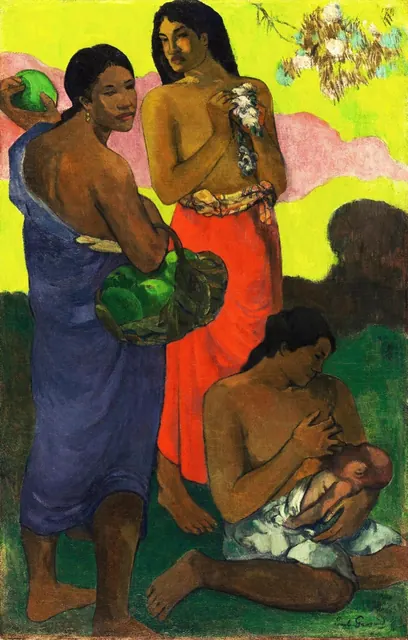
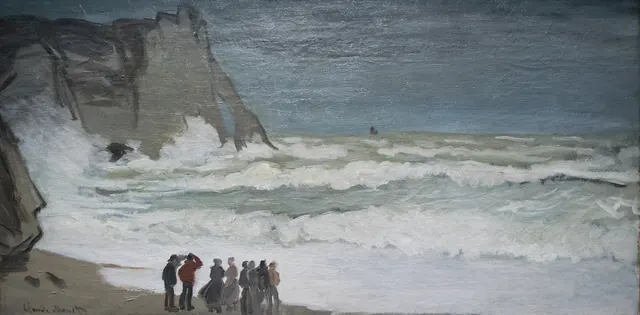
Nine of the paintings that passed through Denys Cochin’s hands, from Manet to Cézanne. The whole collection, its thirty-one Cézannes, Maurice Denis’s decoration and the mourners of the duke of Berry are on a page of their own.
See the collection 103 works found · 31 Cézannes · 20 paintings sold in 1919
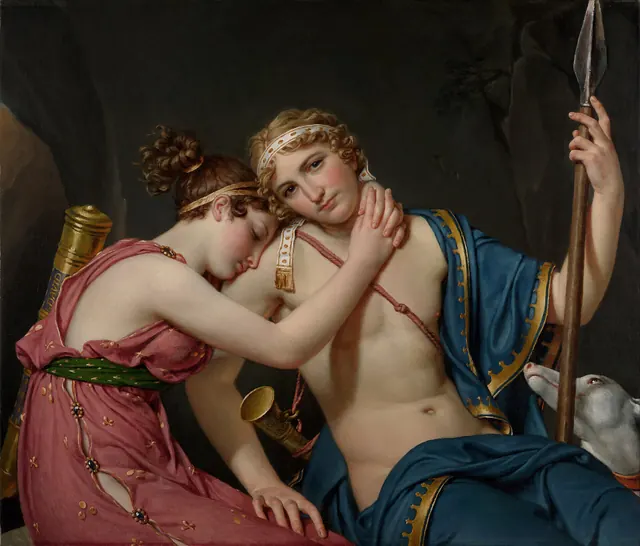
Davidlot 8 of the sale
The Farewell of Telemachus and Eucharis
1818 · Canvas, 88 × 102 cm
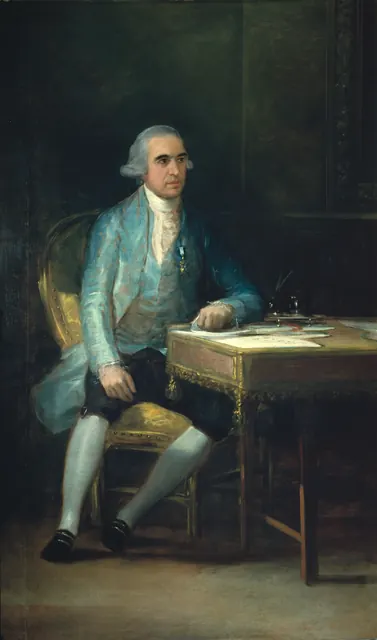
Goyalot 14 of the sale
Portrait of Francisco de Saavedra
1798 · Canvas, 200 × 120 cm
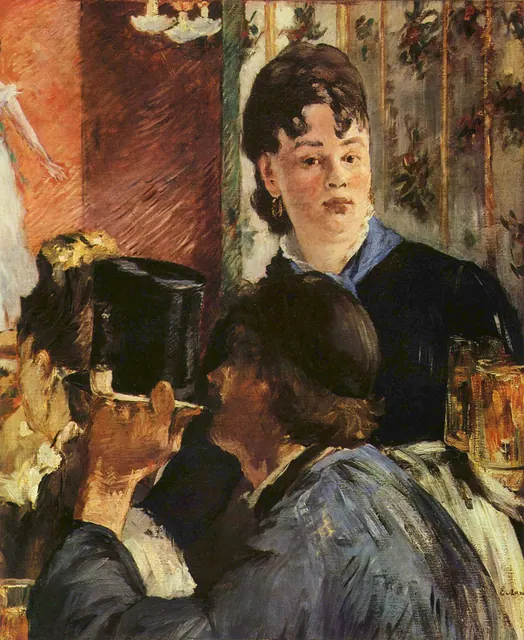
Manetlot 18 of the sale
The Waitress (La Serveuse de bocks)
1878-1879 · Canvas, 77 × 64 cm
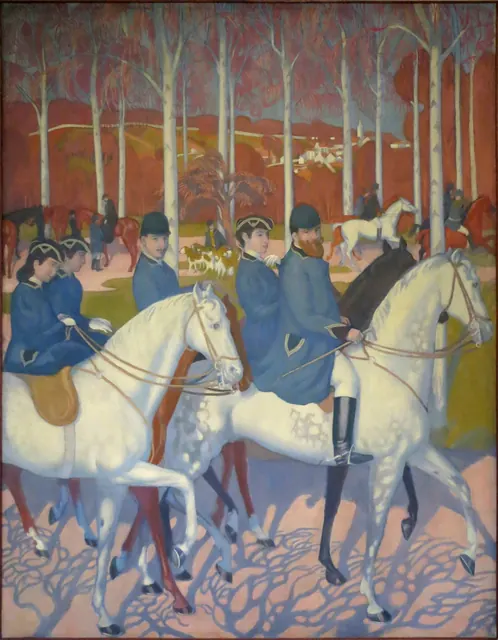
Maurice Denis
The Legend of Saint Hubert · The Departure
1896-1897 · Seven canvases of 225 × 175 cm, the Miracle 225 × 212 cm; ceiling 488 × 134 cm
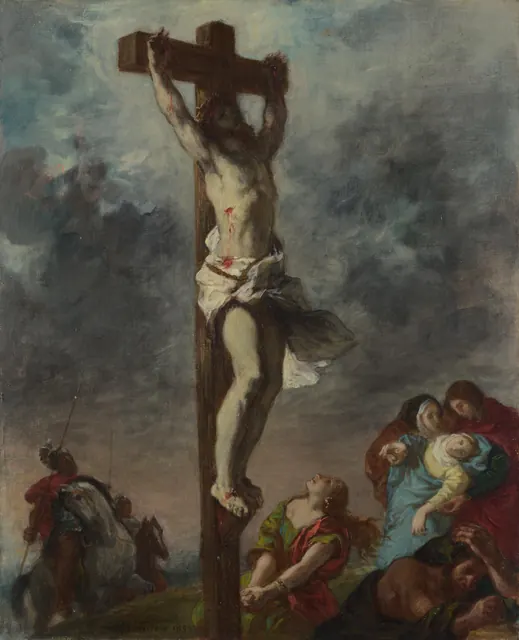
Delacroixlot 11 of the sale
Christ on the Cross
1853 · Canvas, 73 × 59 cm
Letters
The family’s writings
Nine Cochins published, from the advocate at the Parlement of 1751 to the historian of the Revolution: for each, up to three of his books. Every title, with the libraries that give it to read, is on a page of its own.
See the writings 9 authors · 82 books · 18 articles of the Revue des Deux Mondes
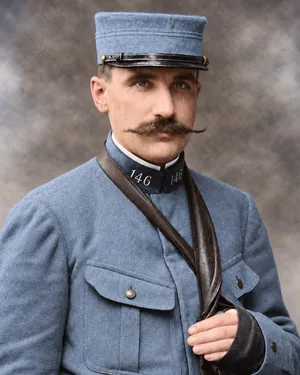
Augustin Cochin 1876 – 1916
Historian of the Revolution, archivist, army captain
The French Revolution, the sociétés de pensée, the critique of Jacobin history
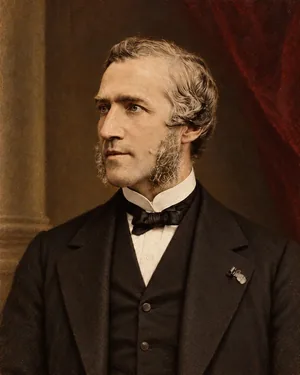
Augustin Cochin 1823 – 1872
Prefect, writer, member of the Institut de France
Slavery and its abolition, the condition of workers, popular education, liberal Catholicism
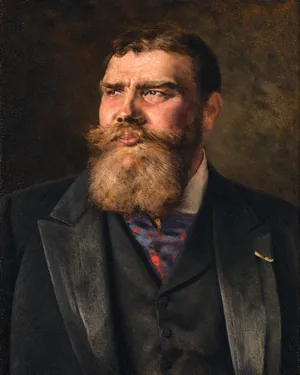
Denys Cochin 1851 – 1922
Minister of State, deputy, member of the Académie française
Science and religion, evolution, municipal and national politics, the Great War
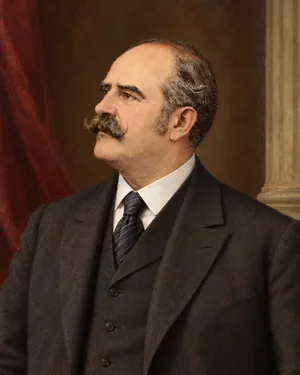
Henry Cochin 1854 – 1926
Deputy for the Nord, historian, member of the Institut de France
The Italy of Boccaccio, Petrarch and Dante, Fra Angelico, Flanders and the devastated North
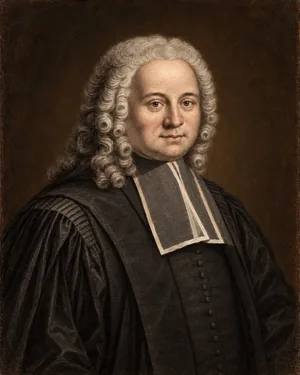
Henri Cochin 1687 – 1747
Advocate at the Parlement of Paris
Pleadings and lawyers’ memoirs, the civil law of the eighteenth century
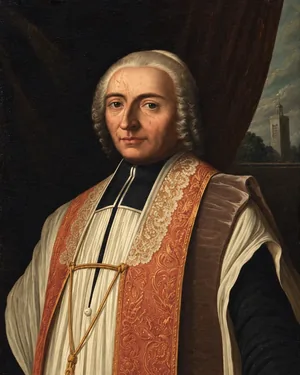
Jean-Denis Cochin 1726 – 1783
Parish priest of Saint-Jacques-du-Haut-Pas, founder of the Cochin Hospital
Parish preaching, piety and the feasts of the Church
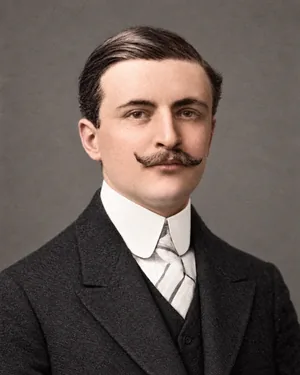
Claude Cochin 1883 – 1918
Deputy for the Nord, historian, archivist
Jansenism and the Arnaulds, Parisian history, notes from the front
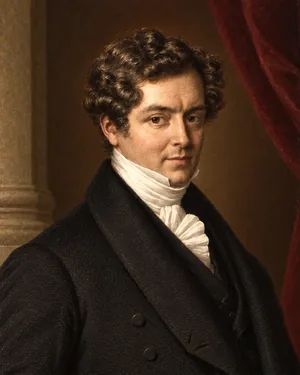
Jean-Denis Cochin 1789 – 1841
Deputy, mayor, founder of infant schools
Infant schools and early education, mendicity
Claude-Denys Cochin 1724 – 1796
Paymaster of the rentes, administrator of the Hôpital général
Parish charity at Saint-Jacques-du-Haut-Pas
Genealogy
The family tree
The ancestors of Augustin Cochin, the descendants of the alderman Claude-Denys Cochin, from whom he descends, and an interactive chart that brings them together, in another window. A click on a name opens its notice; a coronet marks a baron, a ribbon a decoration.
Alliances
The principal alliances
The principal families the Cochins married into, from the most recent to the oldest. Each card opens on the marriage, the motto and the blazon; 5 families still await their arms.
 Montalembert1982
Wikipedia counts the Montalemberts among the family’s principal alliances, in 1982[1].
« Ferrum fero, ferro feror »[2]
D’argent à la croix ancrée de sable.[3]
Wikipedia ↗The drawing on Wikimedia Commons ↗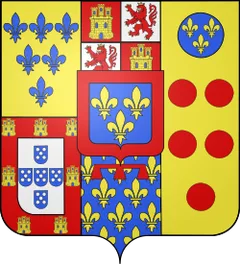 Bourbon-Siciles1977
Wikipedia counts the Bourbon-Two Sicilies among the family’s principal alliances, in 1977[1].
Parti de deux, en I coupé d’or aux six fleurs de lys d’azur posées 3, 2 et 1 (qui est de Farnèse) et d’argent, à cinq écussons d’azur, posés en croix, les deux de flanc mis de côté, chaque écusson chargé de cinq besants du champ, posés en sautoir, à la bordure de gueules, chargée de neuf châteaux d’or, donjonnés de trois tours, ouverts et ajourés d’azur (qui est du Portugal), en II coupé écartelé en 1 et 4, de gueules au château d’or ouvert et ajouré d’azur (qui est de Castille) et en 2 et 3 d’argent au lion de gueules armé, lampassé et couronné d’or (qui est de Leon) et d’azur semé de fleurs de lys d’or au lambel de gueules (qui est de Naples) et en III d’or à six tourteaux mis en orle, cinq de gueules, celui en chef d’azur chargé de trois fleurs de lis d’or (qui est de Toscane) ; sur le tout d’azur, à trois fleurs de lys d’or, à la bordure de gueules (qui est d’Anjou).[2]
Wikipedia ↗The drawing on Wikimedia Commons ↗ Foras1966
Wikipedia counts the Foras among the family’s principal alliances, in 1966[1].
« Intus et foras undique crucis amor »[2]
D’or à la croix d’azur.[3]
The drawing on Wikimedia Commons ↗ des Prez de La Morlais1948
Philippe Cochin de Billy married Françoise des Prez de La Morlais at Montrozier on 11 October 1948, according to the Pierfit tree[1].
D’argent à huit losanges de gueules, accolées quatre à quatre et rangées en deux fasces ; au croissant de sable en abyme.[2]
The drawing on Wikimedia Commons ↗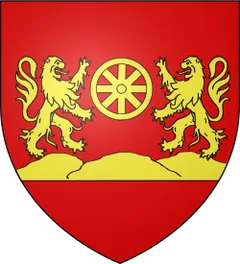 Frévol d’Aubignac de Ribains1947
Denys Cochin married Thérèse de Frévol d’Aubignac de Ribains in Paris in June 1947[1, 2].
De gueules, à deux lions d’or affrontés tenant une roue du même, sur un mont aussi d’or.[3]
The drawing on Wikimedia Commons ↗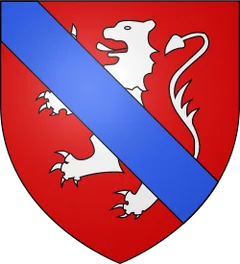 Menthon1938
Baron Jean Cochin, a retired naval captain, married Bernardine de Menthon in 1938[1]; Wikipedia dates the alliance to 1940[2].
« Partout Menthon, toujours Menthon »[3, 4]
De gueules, au lion d’argent, à la bande d’azur, brochant sur le tout.[4]
Wikipedia ↗The drawing on Wikimedia Commons ↗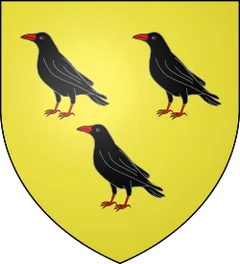 Galard Terraube1936
The marriage of Mlle Cochin and the marquis de Galard Terraube was celebrated on 29 February 1936 at the church of Saint-François-Xavier[1].
« Ad utrumque »[2]
D’or à trois corneilles de sable, becquées, membrées et onglées de gueules.[3]
Wikipedia ↗The drawing on Wikimedia Commons ↗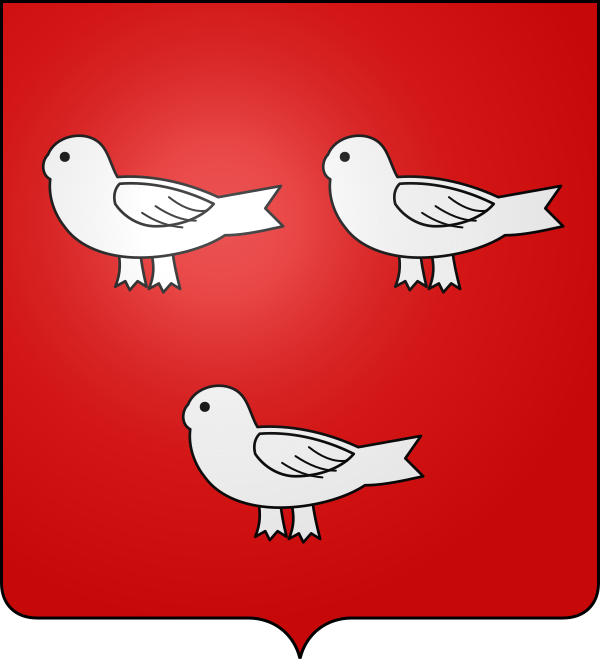 La Barre de Nanteuil1921
Sabine Cochin married Gabriel de La Barre de Nanteuil at Évry-Petit-Bourg on 27 November 1921[1].
« Veritas liberavit et servabit »[2]
De gueules, à trois merlettes d’argent.[2]
Wikipedia ↗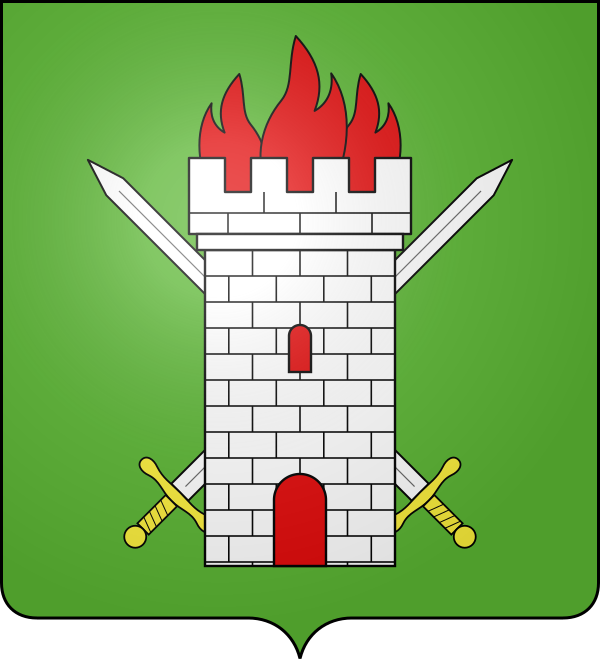 Millon de La Verteville1919
Suzanne Cochin took as her second husband, on 18 December 1919, Christian Millon de La Verteville, according to the Pierfit tree[1].
De sinople, à la tour d’argent, maçonnée de sable, ouverte et ajourée de gueules, enflammée du même, aux deux épées d’argent, garnies d’or, passées en sautoir derrière la tour.[2]
Wikipedia: Henry de Montherlant, of the same family ↗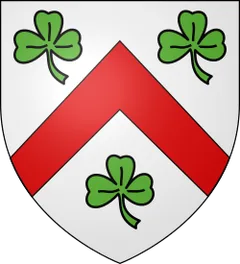 Le Couteulx de Caumont1919
Marie-Marguerite Cochin, daughter of Pierre Cochin, married Guy Le Couteulx de Caumont on 6 October 1919, according to the Pierfit tree[1].
D’argent au chevron de gueules accompagné de trois trèfles de sinople.[2]
Wikipedia ↗The drawing on Wikimedia Commons ↗Fenaille1915arms not found
Claude Cochin married in 1915 Yvonne Fenaille, daughter of the patron Maurice Fenaille[1].
Wikipedia: Maurice Fenaille, the bride’s father ↗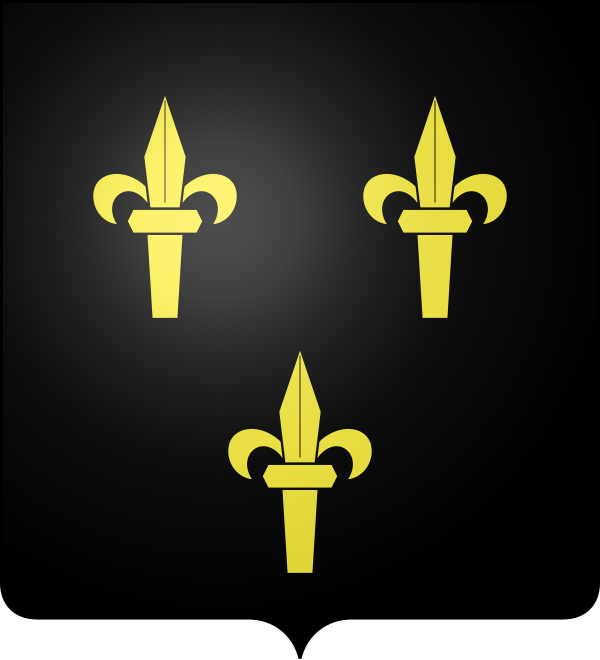 Morisson de La Bassetière1912
Thérèse Cochin married Henri Morisson de La Bassetière in Paris on 14 May 1912, according to the Pierfit tree[1].
De sable à trois roquets (fers de lance) d’or.[2]
Wikipedia: the château de la Bassetière ↗Firmin-Didot1911arms not found
Jacques Cochin married Mlle Firmin-Didot, daughter of Maurice Firmin-Didot, at the basilica of Sainte-Clotilde[1]; Wikipedia dates the alliance to 1911[2].
Wikipedia ↗Quenault de La Groudière1909arms not found
Marie-Anne Cochin married the deputy and mayor Bernard Quenault de La Groudière in Paris on 13 October 1909[1].
Wikipedia: Bernard Quenault de La Groudière, the groom ↗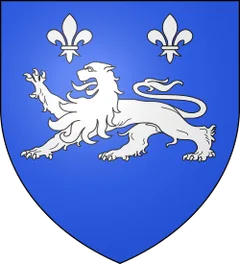 Guéhéneuc de Boishüe1907
Geneviève Cochin, daughter of Pierre Cochin, married Charles de Guéhéneuc de Boishüe on 19 November 1907, according to the Pierfit tree[1].
D’azur au lion léopardé d’argent, accompagné en chef de deux fleurs de lys du même.[2]
Wikipedia ↗The drawing on Wikimedia Commons ↗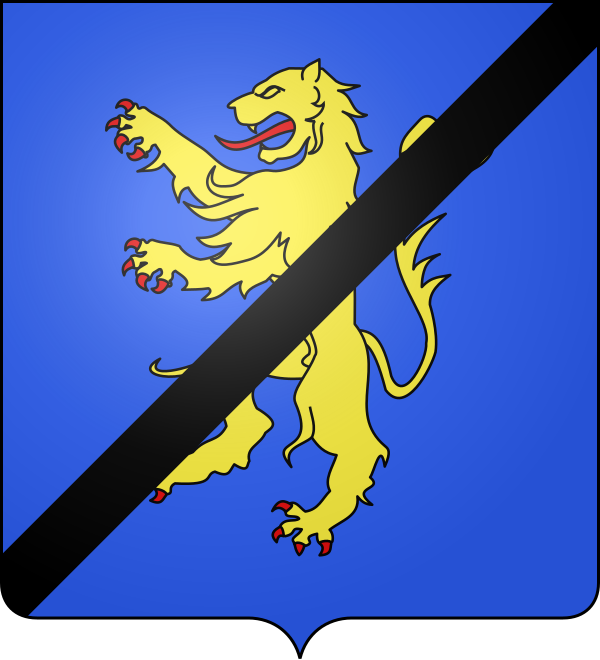 La Motte Saint-Pierre1907
 Ghaisne de Bourmont1906
Madeleine Cochin married on 30 June 1906 Count Armand de Ghaisne de Bourmont, a great-grandson of Marshal de Bourmont[1].
« A Ghisne, Gand, Coucy ! »[2]
Écartelé, aux 1 et 4 vairés d’or et d’azur, qui est de Ghaisne, au franc quartier de sable au chef d’argent, qui est Gand ; aux 2 et 3 fascés de vair et de gueules de six pièces, qui est Coucy.[3]
Wikipedia: Marshal de Bourmont ↗The drawing on Wikimedia Commons ↗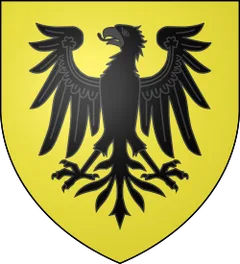 d’Astorg1905
Jean Cochin married Thérèse d’Astorg at Orléans on 24 July 1905[1]; she was a granddaughter of Eugène d’Astorg[2].
D’or à l’aigle de sable.[5]
Wikipedia ↗The drawing on Wikimedia Commons ↗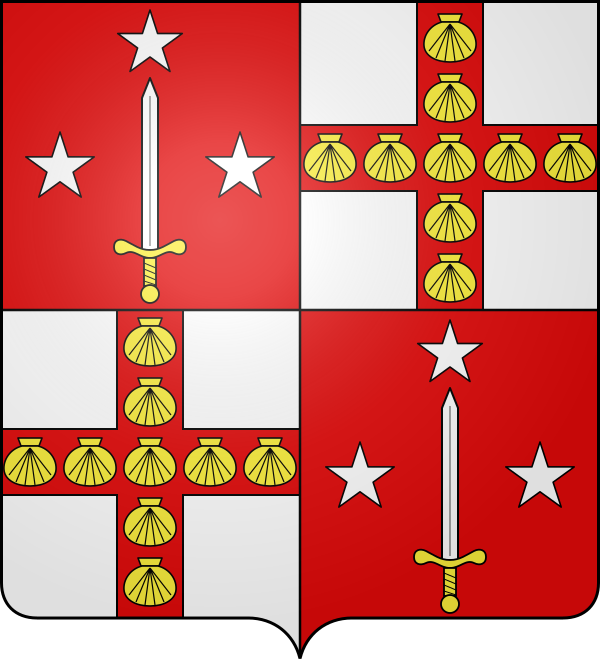 Péan de Saint-Gilles1876
Denys Cochin married Hélène Péan de Saint-Gilles, daughter of Léon Péan de Saint-Gilles, in Paris on 20 March 1876[1].
Écartelé, aux 1er et 4e, de gueules à l’épée haute en pal d’argent, la garde et la poignée d’or, accompagnée de trois étoiles d’argent, 2 en flancs, 1 en pointe ; aux 2e et 3e d’argent à la croix de gueules chargée de neuf coquilles d’or.[2]
Wikipedia: Léon Péan de Saint-Gilles, the bride’s father ↗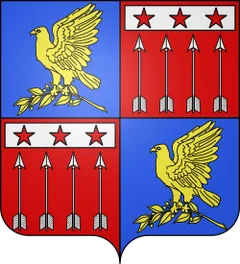 Benoist d’Azy1849
Jean-Denis Cochin married Augustine Benoist in 1820[1, 2, 3]; Augustin Cochin married in 1849 Adeline Benoist d’Azy[3, 4], his first cousin on his mother’s side[5].
« Benefacientes benedicti »[6]
Écartelé : au I et IV, d’azur au faucon essorant d’or et tenant une branche de laurier du même ; au II et III, de gueules à 4 flèches d’argent rangées en fasce, au chef alésé du même chargé de 3 étoiles du champ.[7]
Wikipedia: Denys Benoist d’Azy, the bride’s father ↗The drawing on Wikimedia Commons ↗ Carron de La Carrière1816
Marie-Rosalie-Hugues Cochin, daughter of Jacques-Denis, married Ange-Marie-Simon Carron de La Carrière on 30 May 1816[1]; Chaix d’Est-Ange and Wikipedia count the alliance among the principal ones[2, 3].
D’azur au chevron d’or accompagné en chef de deux croissants d’argent et en pointe de trois losanges du même rangées en fasce.[4]
Wikipedia ↗The drawing on Wikimedia Commons ↗
The title of baron
Seven barons in two centuries
On 10 March 1820 an ordinance of Louis XVIII created Jacques-Denis Cochin, mayor of the 12th arrondissement of Paris, a hereditary baron[1, 2, 3]. In France a title passes from male to male, by order of primogeniture from the first holder: to the eldest son, and, when the eldest dies without a son, to the next line[4, 5]. Twice the title has thus passed from an uncle to his nephew, in 1886 and in 1962[6, 7]. The title is granted on the promise of setting up a majorat: an estate whose income supports the title, and without which the letters patent that complete it are not issued[8]. Jacques-Denis does what is required: from 26 February 1820 he asks for his title to be registered; on 23 August an estimate of his estate of La Roche makes it the majorat, worth 5,000 francs a year; the fee of 4,000 francs is paid[9, 10, 11, 12]. He also asks that his letters of nobility mention the foundation of the Cochin hospital by his uncle the abbé[12]. The Commission du sceau refuses the mention; father and son then give up the letters, in December 1821, rather than take them without it[9, 12, 13]. Jacques-Denis’s will, in November 1827, authorises his son to obtain them; Jean-Denis looks into it in December 1830, then lets it rest[14]. On 1 September 1838, eleven months after his father’s death, he has the majorat annulled[15, 16]. The title has thus stayed without letters patent, by the family’s choice[8, 12]. Its tradition has it that the hospital was its majorat: it is the memory of the refused mention[12, 17]. The only letters patent a Cochin ever obtained from the king, as far as the research has found, are those of May 1790, sought since 1785: they approve the foundation of the abbé Cochin’s hospice by his brother Claude-Denis[18, 19].
First baron
Jacques-Denis Cochin 1757 – 1837
1820 – 1837
Mayor of the 12th arrondissement of Paris, he was created a hereditary baron by an ordinance of Louis XVIII of 10 March 1820[1, 2].
Second baron
Jean-Denis Cochin 1789 – 1841
1837 – 1841
The first baron’s only son, he inherited the title on his father’s death, on 12 October 1837[1, 2].
Third baron
Denys-Guillaume Cochin 1822 – 1886
1841 – 1886
The second baron’s elder son, he inherited the title on his father’s death, on 18 August 1841[1, 2]. He died without issue, on 16 April 1886[3, 4].
Augustin Cochin 1823 – 1872
The third baron’s younger brother, he died before him, on 15 March 1872; the title would go to his eldest son[1, 2].
Fourth baron
Denys Cochin 1851 – 1922
1886 – 1922
Augustin’s eldest son, he inherited the title from his uncle Denys-Guillaume in 1886[1, 2]. Le Figaro calls him “le baron Denys Cochin” in 1911[3].
Augustin Cochin 1876 – 1916
The fourth baron’s eldest son, the historian was killed in action on 8 July 1916, before his father, without issue[1, 2, 3].
Fifth baron
Jean Cochin 1878 – 1962
1922 – 1962
The fourth baron’s second son, he inherited the title on his father’s death, on 24 March 1922[1, 2]. The Journal des débats calls him “le baron Cochin” in 1938[3].
Augustin Cochin 1907 – 1934
The only son Wikipedia gives the fifth baron, he died before him, on 13 May 1934, aged twenty-seven[1, 2].
Jacques Cochin 1879 – 1915
The fourth baron’s third son, he died for France in February 1915; on his brother Jean’s death, the title would go to his son[1, 2, 3].
Sixth baron
Denys Cochin 1913 – 2003
1962 – 2003
Jacques’s only son, he inherited the title from his uncle Jean, who died on 24 March 1962, by order of male primogeniture[1, 2, 3, 4].
Seventh baron
Augustin Cochin 1950 –
since 2003
The sixth baron’s eldest son, he inherited the title on his father’s death, on 24 July 2003[1, 2].
Places and legacy
A name on the map
A hospital, streets, a square: the Cochin name remains attached to Paris and to a handful of French towns. Pick a place to find it on the map.
« Un Cochin peut errer à travers Paris comme à travers un musée familial. »Paris
Around Paris
The North
The battlefields
Elsewhere in France
Far away
1915 – 1944
Died for France
Ten members of the family, born Cochin, descended from the alderman or married to his descendants, died for France in the two world wars.
The Great War 1914 – 1918
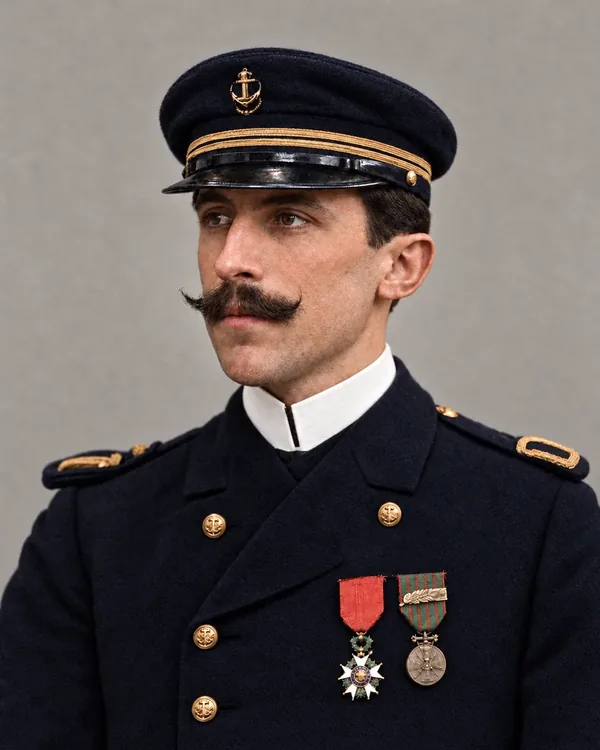
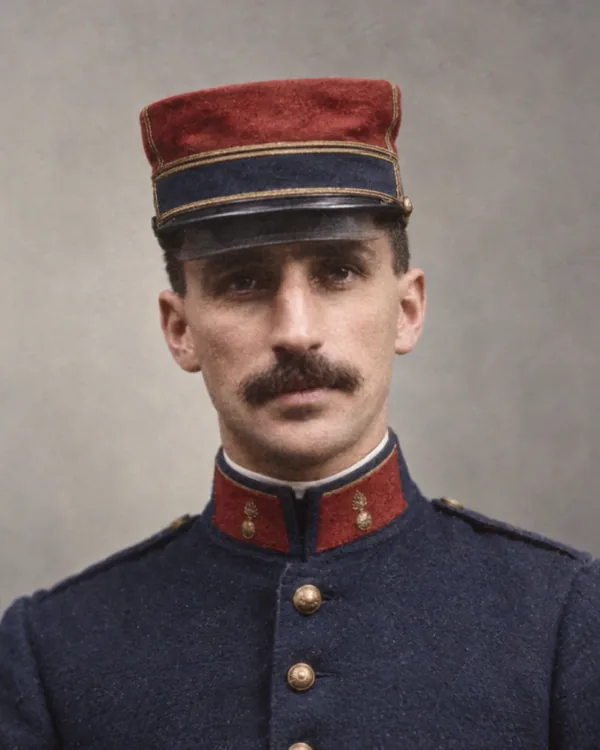
Jacques Cochin 1879 – 1915
The third son of Denys Cochin and a captain in the 325th Infantry Regiment, he fell on the Xon, at Lesménils, on 13 February 1915 according to his “died for France” record[1, 2]. Mémoire des hommes ↗
Henri de La Motte Saint-Pierre 1881 – 1915
The first husband of Suzanne, daughter of Pierre Cochin[1]. A quartermaster corporal in the 13th Artillery Regiment, in the motor service, he died at Amiens on 8 June 1915 in an accident on duty[2, 3]. Mémoire des hommes ↗
Charles Lempereur de Saint-Pierre 1894 – 1915
The son of Henri Lempereur de Saint-Pierre, of the descent of the alderman Claude-Denys Cochin[1]. A second lieutenant in the 101st Infantry Regiment, he died for France at Mourmelon-le-Grand on 25 August 1915, aged twenty-one[2]. Mémoire des hommes ↗
Augustin Cochin 1876 – 1916
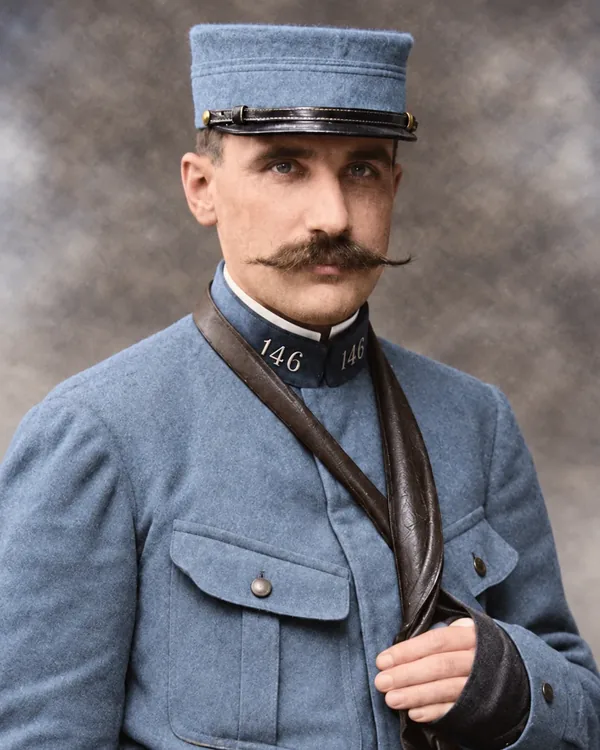
The son of Denys Cochin, a historian and sociologist, and a captain in the 146th Infantry Regiment, he was killed in action at Maricourt, in the Somme, on 8 July 1916[1, 2, 3]. Mémoire des hommes ↗
Armand de Ghaisne de Bourmont 1880 – 1917
The husband of Madeleine, daughter of Denys Cochin[1]. A captain in the 101st Artillery Regiment, he was killed in action in the ravin des Fontaines, at Vaux, in the Meuse, on 23 July 1917[2]. Mémoire des hommes ↗
Charles de Guéhéneuc de Boishüe 1875 – 1918
The husband of Geneviève, daughter of Pierre Cochin[1]. A major in the 59th battalion of chasseurs à pied, he was killed in action at Priez, in the Aisne, on 20 July 1918[2, 3]. Mémoire des hommes ↗
Jean Dufour de Quetteville 1884 – 1918
The son of Berthe Lempereur de Saint-Pierre, of the descent of the alderman Claude-Denys Cochin[1]. A sergeant in the 84th Heavy Artillery Regiment, he died for France on 11 October 1918 at Pars-lès-Romilly, in the Aube, in auxiliary hospital no. 30[2]; the Pierfit tree adds that he died of the effects of gas poisoning[1]. Mémoire des hommes ↗
Claude Cochin 1883 – 1918
The son of Henry Cochin, whom he succeeded as deputy for the Nord, and a reserve lieutenant on the staff of the 55th Division, he died in Paris on 31 December 1918 of an illness contracted in service[1, 2, 3]. Mémoire des hommes ↗
The Second World War 1939 – 1945
Victor de Galard-Terraube 1903 – 1940
The husband of Adeline, daughter of Jacques Cochin[1]. A cavalry captain taken prisoner, he died of illness in captivity in Germany on 22 November 1940[1, 2]. Mémoire des hommes ↗
Agnès de La Barre de Nanteuil 1922 – 1944
The daughter of Sabine Cochin and a liaison agent of the Resistance, she was arrested in March 1944; wounded on the train deporting her, she died at Paray-le-Monial on 13 August 1944[1, 2, 3, 4]. Mémoire des hommes ↗